


Last year, my wife and I went through the hardest thing we’ve ever faced - a traumatic health crisis. That’s a story for another day.
But one part of it belongs here: health insurance ended up playing a major role. And the last thing you want to think about in the middle of something like that is money.
A few months later, the bills started showing up. The total: $32,000.
Dealing with our insurance company was a nightmare. Phone trees, coding errors, claims that needed to be resubmitted. More than once I hung up thinking, “This whole system is a scam.”
Then the final number came in a few weeks back. We owed about $1,000.
I’ve spent my career telling people why this stuff matters. Living it was different.
Scroll any comment section about money and you’ll see the same takes over and over. “401(k)s are a scam.” “Insurance is a scam.” “Life insurance never pays out.”
Here’s what I’ve noticed: almost everyone saying it hasn’t been on the other side yet.
Everything’s a scam - until the day it isn’t.
Let’s dig in ↓
Why “It’s a Scam” Feels True
The skeptics aren’t crazy. Even me - before I went through and saw these things first hand I was constantly complaining about the system. We are simply reacting to how these tools feel day to day.
You pay a premium every month and get nothing you can see. Money disappears from your paycheck into an account you can’t touch for 30 years. The market drops 20% and your statement looks like a punishment for saving.
The cost is immediate and visible. The payoff is delayed and invisible.
And for most of your life, the best-case outcome of insurance is that you never use it. That’s a hard thing to feel good about writing a check for.
There are also real problems. Claims get denied. Some 401(k) plans are stuffed with high-fee funds. Plenty of people have been sold expensive insurance products they never needed.
So the frustration is legitimate. The conclusion is where people go wrong.
Health Insurance: The $31,000 Difference
Most people judge health insurance by their routine years. A few checkups, a prescription, maybe an urgent care visit. Add up the premiums and it feels like you’re getting robbed.
But you don’t buy health insurance for your routine years. You buy it for your worst one.
The single most important number in your plan is the out-of-pocket maximum. It’s a ceiling on how bad your worst year can get financially.
Without it, one bad week in a hospital can wipe out a down payment, an emergency fund, or years of savings. With it, the damage has a limit.
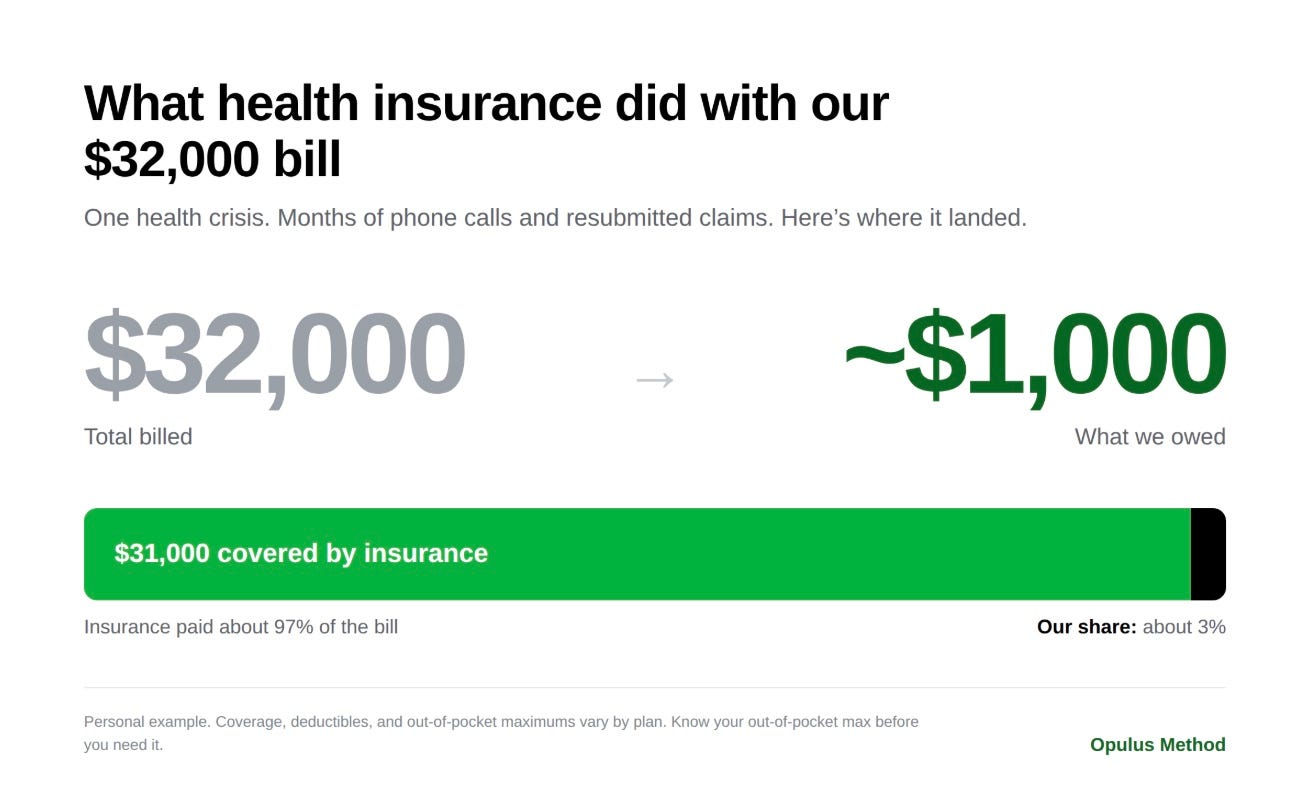
I’ll be honest - the system is broken in a lot of ways. If you’re dealing with a big claim, request an itemized bill, check every code, and appeal anything that looks wrong. Be annoying. It works.
But both things are true. The process was miserable, and the coverage saved us $31,000 in the worst month of our lives.
The 401(k): Boring Beats Brilliant
The complaints are familiar. Your money is locked up. There are penalties. The market goes down. Fees eat your returns.
Meanwhile, Fidelity counted a record 769,000 401(k) millionaires on its platform as of mid-2026. The average savings rate among them was 17.3%.
Most of those people aren’t investing geniuses. They set up a contribution, captured the match, and didn’t touch it through recessions, bear markets, and every scary headline in between.
Here’s what that looks like with real numbers. Someone earning $75,000 contributes 6% of their pay, and their employer matches 4%:
$375/month from them + $250/month from the employer = $625/month
Over 35 years at a 7% average annual return ≈ $1.13 million
Total contributed: $262,500 - and only $157,500 came out of their own pocket
That assumes they never get a single raise.
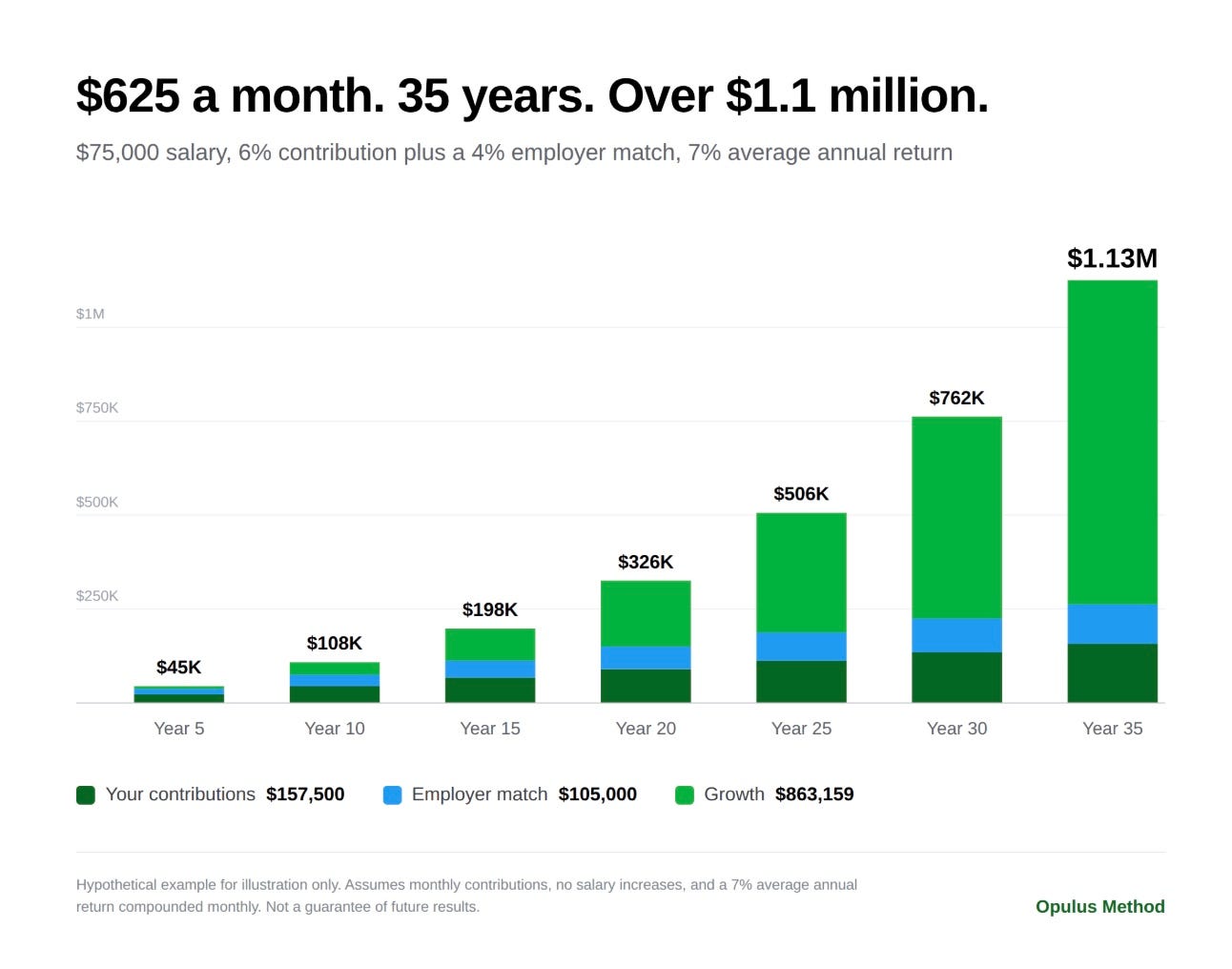
I’ve watched this play out constantly. People who would have nothing saved if not for an employer automatically setting aside a slice of every paycheck. The 401(k) didn’t make them smart with money. It took the decision off the table.
Where the skeptics have a point: fees matter. Check the expense ratios on your funds. If your plan only offers expensive options, it’s worth discussing with a financial planner how to work around it.
Life Insurance: A Family Saver
“Life insurance never pays out.” I hear this one all the time.
U.S. life insurers paid $89 billion to beneficiaries in 2024 alone.
So where does the myth come from? Most term policies expire without ever paying a claim - because most people outlive the term. That’s the design working, the same way your homeowners policy “wasted” your money every year your house didn’t burn down.
When claims do get denied, it’s often because something was misrepresented on the application, or the death happened during the contestability period (typically the first two years of the policy). Be fully honest on the application and that risk drops dramatically.
A friend’s family went through this recently. Their dad passed unexpectedly. On top of the grief, they were staring down a mortgage, college for the kids, and a household that had just lost its primary income.
Then they found out he had $2.5 million in term life insurance.
It didn’t make the grief any smaller. But it meant his wife could keep the house, the kids could stay in their schools, and nobody had to make a financial decision while they were barely holding it together.
I started my career at an insurance-driven firm, so I’ll say this plainly: the scam people smell is sometimes real. It’s just aimed at the wrong target. Simple term coverage is one of the most cost-effective tools in planning. The trouble usually starts when complex, expensive permanent policies get sold to people who really just needed term.
Three More “Scams” Worth a Second Look
Disability insurance. Feels pointless when you’re healthy. But your ability to earn is likely your biggest asset - $150,000 a year over 30 years is $4.5 million. The Social Security Administration estimates about 1 in 4 of today’s 20-year-olds will become disabled before reaching full retirement age.
Umbrella insurance. “Why would I ever need $1 million in liability coverage?” Until a car accident or an injury on your property turns into a lawsuit. It often costs a few hundred dollars a year.
A will and estate plan. “Lawyers just want fees.” Until someone dies without one, a court decides who raises the kids, and the family spends months in probate.
How to Tell a Real Scam From a Tool You Just Haven’t Needed
Before you write something off, run it through these questions:
What disaster does this protect against? Could I absorb that cost on my own if it happened tomorrow?
What does it actually cost, all in? Premiums, fees, expense ratios, surrender charges.
Who’s getting paid to sell it to me, and how? Commissions aren’t automatically bad, but they should make you ask more questions.
Is this the simple version or the complicated one? In my experience, complexity is where bad deals hide.
Do I understand what’s excluded? Read the fine print before you need it, not after.
If the answers check out, it’s probably not a scam. It’s a tool doing exactly what it’s supposed to do.
What You’re Really Buying
Here’s what I didn’t fully understand until last year.
When you’re going through something devastating, the money is never the main thing. But it can become one more thing - one more weight on people who are already at their limit.
Every one of these tools buys you the same thing: the ability to deal with life’s worst moments without also doing math.
That’s the return that never shows up on a spreadsheet. You only see it when you need it. And when you need it, nothing else matters more.
The Bottom Line
Most “scams” feel that way because the cost is visible and the payoff is invisible - until it isn’t
Health insurance exists for your worst year, not your average one. Know your out-of-pocket max.
401(k)s turn small, automatic contributions into seven figures for people who stay consistent
Life insurance pays out tens of billions every year. Most term policies don’t pay because most people outlive them - that’s the point.
The real scam is usually the wrong product sold to the wrong person, not the tool itself
Protection planning isn’t exciting. You won’t brag about it at dinner. But one day, it might be the reason a terrible moment doesn’t become a financial one too.
See you next week.
— Fran


Whenever you’re ready, there are 2 other ways we can help you:
Join The Opulus Method Newsletter — Every Tuesday, I share strategies that help high-income millennials build wealth without sacrificing their life. Join 3,200+ readers.
Work With Us 1-on-1 — We’ll build your personalized strategy to cut your taxes, maximize your income, and grow your wealth month after month. You focus on living your life. We handle the financial strategy and execution.
Opulus, LLC (“Opulus”) is a registered investment advisor in Pennsylvania and other jurisdictions where exempted. Registration as an investment advisor does not imply any specific level of skill or training.
The content of this newsletter is for informational purposes only and does not constitute financial, tax, legal, or accounting advice. It is not an offer or solicitation to buy or sell any securities or investments, nor does it endorse any specific company, security, or investment strategy. Readers should not rely on this content as the sole basis for any investment or financial decisions.
Past performance is not indicative of future results. Investing involves risks, including the potential loss of principal. There is no guarantee that any investment strategies discussed will result in profits or avoid losses.
All information is provided “as-is” without any warranties, express or implied. Opulus does not warrant the accuracy, completeness, or reliability of the information presented. Opinions expressed are those of the authors, Ryan Greiser and Francis Walsh, and are subject to change without notice.
Opulus is not responsible for any errors or omissions, nor for any direct, indirect, or consequential damages resulting from the use or reliance on this information. Use of the content is at your own risk. This content is not intended as an offer or solicitation in any jurisdiction where such an offer or solicitation would be illegal.